Are you looking for the ultimate B2C eCommerce business plan?
Well, you’ve come to the right place because that’s exactly what I’ll be going over in this post.
I’ll be revealing how you can easily create a plan for your business step by step. This is an actionable guide with actionable steps you and your team can take.
This guide is great for startups and already established businesses. You’re going to want to read this guide from top to bottom because I created this guide as being the only guide on the internet you’ll ever need for your eCommerce business.
So, let’s jump right in!
What is an eCommerce business plan?
Great eCommerce business plans help the company focus on clear goals and the necessary steps needed to get there. The plan is essentially a road map on how to get from A to Z. It helps employees and investors understand what’s going on in the business.
How do you plan an eCommerce strategy?
You plan out an eCommerce strategy by first creating your goal, where you want the business to be. Then you create a brief outline of how you plan to get there. After your brief outline, you go into detail about how you will reach your goal. You're simply working backward from your goal.
Phase 1: Setting the foundation
In this section, I’ll be showing you how to lay the foundation for your B2C eCommerce company.
You don’t want to skip this part because if you don’t have the foundation right, everything will come crumbling down.
What do you sell and who is your target audience?

You need to understand your product(s) and who you’re selling to. Are you a general store that sells everything under one roof, from pianos to anime figures? Or are you operating within a niche or industry?
I would recommend at least being within an industry instead of being a one stop shop. You don’t want to be competing with every company out there.
Let’s say you’re a power tool store, who’s your target audience? Don’t just say to yourself, ‘these are my customers’. Instead, write it down, this is an exercise every business owner should do.
What age is your ideal customer? 40 - 60 years old?
What gender? If you're selling power tools, they’re probably going to be male.
What are their hobbies? They enjoy hands-on activities like general DIY work and gardening.
What objections do they have against your product? They may think the product will break easily, the item is hard to use and is concerned about the safety of the tools.
Here are some questions you need to ask yourself regarding your customers:
- What are the websites my customers go to?
- What forums do they participate in?
- What are the Facebook groups they engage in?
- Who are the influencers they follow on Facebook and Instagram?
- What podcasts do they listen to?
- What are the email newsletters they’re subscribed to?
- What blogs do they read?
- What channels do they follow on YouTube?
- What keywords are they searching for in Google to find information?
By completing the above exercise, you will be able to visualise who your dream customer is and what they look like.
Here’s how you can create a detailed buyer persona.
Have a well designed website

If your website isn’t optimised for the user, everything is going to fall apart. You could be getting lots of people to your website but if no one is converting from a visitor to a customer, what’s the point? We’ll talk about conversion rate optimization later in this guide.
You need to have a modern, sleek looking website. You don’t want visitors to think, “is it OK to put my credit card details in here?”
Your website must instantly show trust and authority, when someone lands on your website, they should instantly know what it’s all about.
It needs to load quickly, at least under 3 seconds. If you’re on WordPress or Shopify, you can get an out of the box theme. Themes will help massively, you’ll be able to easily adjust how your website looks without having to mess with any code.
However, every theme is limited. So if you want a more customised website, you’ll need to build it yourself. You can get in touch with us if you want a fully customised website.
Monetization methods

Yes, you’ll be selling your products on your eCommerce website, but how else can you make money from it?
Here are some ideas…
Be an affiliate. If you don’t sell a certain product or service, you can recommend someone else in exchange for a percentage of the sale.
Affiliate programs will give you a link unique to your website, so you’ll both know if you made a sale.
Display advertisements. You’ve probably seen ads popping up on websites, pretty annoying, yeah. But they make money. Your ads don’t have to be as annoying as other websites. You’ll be promoting other businesses by displaying their advertisements on your site.
Some ad providers like Ezoic will allow you to choose which businesses can advertise on your website. So you can make sure there are no competitors advertising on your site.
Ads can make your pages look ugly, so don’t fill pages up with ads, make it moderate. They can also slow down your website, so make sure you have a fast loading site and again, don’t stuff it with ads.
Renting your website’s real estate. You can rent out a space on your website like the side bar for example. People can advertise on there in exchange for them paying you, of course.
You can reach out to businesses and tell them about you renting some of your website out.
Sponsored posts. You can charge people that want to publish an article on your website. Let’s say someone reaches out to you and wants to guest post on your blog, you will charge them a fee.
Create a course. Let’s say you have expertise in something, you can create a course around it. For example, you can create a course on how to build a cabin. If you have a bodybuilding eCommerce website, you can create a course on ‘How to increase your bench press’.
I purchased a bench pressing course and it helped me a lot in the gym. I believe I paid about $50 for it. You can decide the price of your course.
Become a consultant. If you have expert knowledge in something, you could sell your time or the time of an employee. Let’s say you charge £100 per hour of your time or an employee’s time.
Build an email list. Building an email list is one of the most profitable ways to monetize your B2C eCommerce business. Maybe the most profitable way to monetize your website. A lot of people swear by the email list.
First you need to get people into your email list. This is done by creating a lead magnet. A lead magnet is something of value that you can get in exchange for their email. Your lead magnet could be a free eBook for example.
Then you need to create an email funnel. This is where you email the person that signed up to your email list. Please don’t start sending them a bunch of promotional emails, they'll just unsubscribe.
Instead, send them some valuable information on a topic they care about like lawns care. After you’ve sent over some valuable information, then you can pitch them a product regarding lawn care.
It’s basically a jab, jab, right hook. The jabs are the informational content, the value and the right hook is the product pitch.
You want to throw more jabs than hooks, the jabs are what’s going to get you in and allow you to set up your hooks.
Easy customer support

You need to make contacting support extremely easy, it should be effortless. One of the things we noticed that helped increase conversion rates was making the contact support option visible on the product page.
So if they have a problem, they can get it resolved.
Now, if you’re worried about your support team getting overwhelmed, you should have some useful content available to them.
For example, having an F.A.Q section on the product page will help, they won’t need to contact support for certain issues. Make sure the instructions are very clear and detailed.
This will help alleviate the burden on your support team.
Supplier to business, business to customer relationship

The shipping of your product has to be rapid. No joke. Rapid.
We live in an age where people want instant gratification. So give it to them! You may debate on the negative impacts this has on the human race like people becoming impatient. But hey, that’s what people want.
Where is your supplier located, where do you stock your inventory? This is going to have an impact on delivery times. If your supplier is located on the other side of the country or world but your storage space allows you to stock enough so you don’t need to worry about running out of stock, there’s no need to concern yourself about this part.
Instead, you can skip to where you store your stock. How long does it take to deliver to customers? The best thing to do is to find where most of your customers are located and set up a base there.
This will dramatically help to cut down delivery times.
Now who’s doing the delivery, you or a third party? At what times do they operate?
You want a carrier service that can deliver in the mornings to the late afternoon. It will take your business to a whole different level if they operate at night as well.
However, you must let the customer know that you’ll deliver the item at night, you don’t want them falling asleep on you. Or worse, you wake them up.
Phase 2: Getting customers to your website
So now that your business is set up and ready to go, you need to bring in the customers.
In this section, I’m going to show you a bunch of amazing ways to drive traffic to your website. Some methods are free and some are paid.
Keyword research and its strategic implementation
What is keyword research? Keyword research is finding search terms related to your business in a data driven way. For example, let’s say you own a bodybuilding company and sell protein powder. You’d want to rank for “Protein powder” or “best protein powders’
How do I know people are searching for these queries? I would recommend using the Google auto suggestion feature. You type a topic into the search bar and if Google finishes that query, it has search volume because Google is suggesting it.
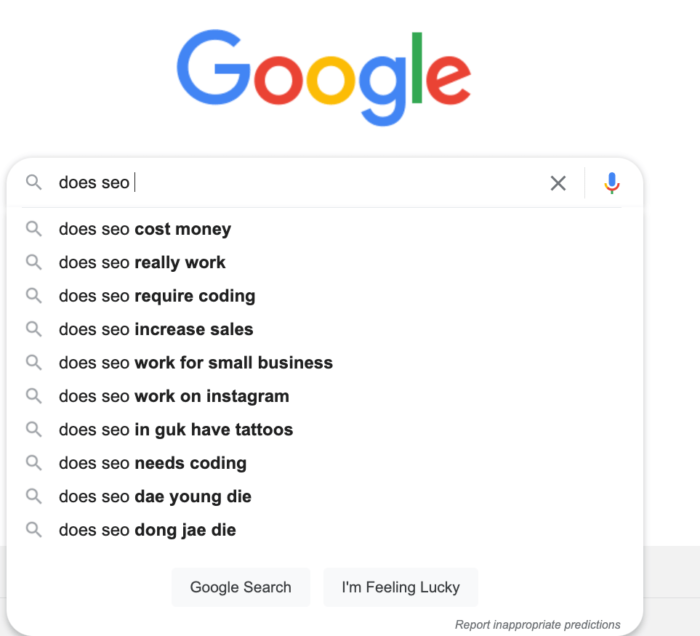
There are other ways to do keyword research, the Google auto suggest function is the best way in my opinion. And keep in mind that I’ve spent a lot and I mean A LOT of time doing keyword research using different methods.
I would also recommend using Answer The Public. This tool spits out the questions users have on a topic.
Keyword Sheeter is another amazing tool. If you have no clue where to start with your keyword research, this tool is for you. Just type in a topic and it will give you so many different keywords.
Not the most accurate way of doing keyword research but it will help you generate lots of ideas.
Last but not least is the Adwords Robot. This will help you to scrape a bunch of keywords using the Google Auto Suggest function. It won’t be as precise as you typing into Google yourself but it’s still a great way to do keyword research.
Setup the Facebook pixel

Facebook is one of the most popular websites of all time and is still incredibly popular, despite the number of lawsuits against them.
And that’s for good reason. Many people still use it because their old friends are there and they want to see how they’re doing. They have their family members there too.
Also, many people have filled out their details including their hobbies, where they work, favourite movies and the list goes on.
Do you know what this allows advertisers to do?
It allows them to be very accurate with who they serve their advertisements to.
In order to run Facebook Ads, you need to set up the tracking pixel. This can be done in various ways, I would recommend installing the pixel using Google tag manager.
Google tag manager is a way to install and organise the tracking code for your website. There are lots of great tutorials on YouTube showing how to set up Google tag manager and Facebook.
Not only can you run the typical ad with Facebook where you’re reaching out to new people. You can also run retargeting ads.
Retargeting ads allow you to target people who have already interacted with your business. Let’s say someone visits your website and decides to not buy anything. You can then run an ad targeting these people.
The ad could be reminding them of what you sell or maybe you incentivize them to buy by offering a discount.
Use Google Adwords
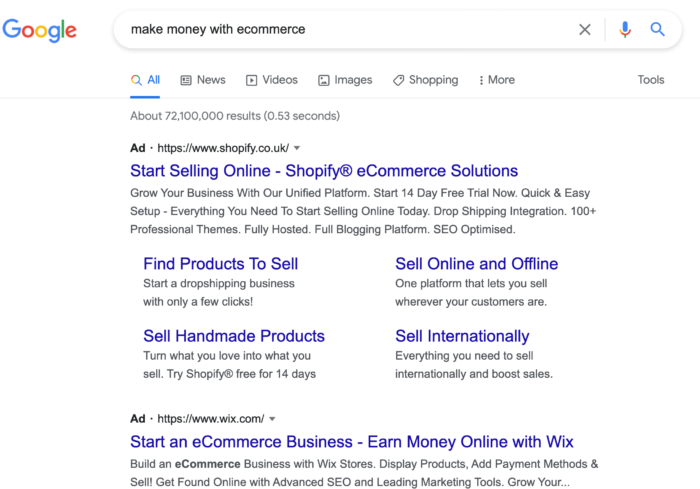
Google Adwords is the most popular advertising platform in the world and that’s for good reason. It runs on the Google search engine. So when you search for something on Google, the ads display above the organic search results.
It’s simple to set up an ad. Select the keywords you want to rank for and pay to show up for those keywords in Google search results.
Of course there’s a lot more that goes into creating an effective Google Adwords campaign but that’s beyond the scope of this article.
You can also do retargeting campaigns with Google ads. Allowing you to target people that have already interacted with your brand.
Retargeting also makes your ads cheaper.
Publish blog posts strategically

Blogging can completely transform your business.
It allows you to tap into an incredible amount of traffic, there’s so much potential behind it.
You do your keyword research and then write blog posts on them. By ranking for these terms you’ll be opening the floodgates of traffic.
By blogging strategically you need to:
- Do effective keyword research
- Create engaging content that satisfies the user intent
- Optimise the post for Google search
- Scale the content
Do effective keyword research
When doing keyword research, you need to make sure that you’re not competing for keywords that are too competitive. For example, if you’re trying to rank for ‘cheap mortgage’, you probably never will. It’s just too competitive because there are large businesses that are competing for that term.
So don’t shoot yourself in the foot by going for super competitive keywords.
Long tail keywords are your friend.
What are long tail keywords? Long tail keywords are keywords that are typically longer than 2 words. Long tail keywords are typically less competitive, however, they also tend to have less search volume.
The more words a search query has, the less search volume it has. But it’s less competitive, usually.
Create a list of these keywords so you don’t have to do research each time you create a blog post.
Create engaging content that satisfies the user intent
When creating content, you first need to make sure that content answers the search query. For example, if someone types into Google,‘best protein powder’, they’re probably looking for a list of the best protein powders. A ‘list’ and not one product.
That might have seemed pretty obvious to you, but often, people don’t realise these small details which will have a big impact on your rankings.
Ask yourself, “Is this content satisfying to the user?”
You also want the content to be engaging. Don’t let it be a big wall of text…
- You need to break it up into chunks.
- Add headers
- Bulleted lists
- Images
- Videos
- Infographics
- Memes
- Add some personality in there.
Don’t let it be a dead corporate blog, let people know there’s actually a person who wrote this.
Optimise the post for Google search
Google is incredibly intelligent but it’s still a robot, it’s still an algorithm and it’s based on math. You need to do your part in telling Google what your content is all about, this is called SEO.
What is SEO? SEO stands for Search Engine Optimisation. It’s the process of improving a website for gaining more search engine traffic. Getting traffic to your website organically and not directly or through paid platforms.
How do I SEO my website?
This is a very broad question and I can create an entire course on this (which I have). I won’t tell you everything about SEO, only the things relevant to you. I don’t want to overwhelm you with information.
I’ll keep it simple.
First of all, do your keyword research (which you should have done at this point).
Next, you need to optimise your on page elements.
This is done by inserting your keyword in the meta title, H1 and URL.
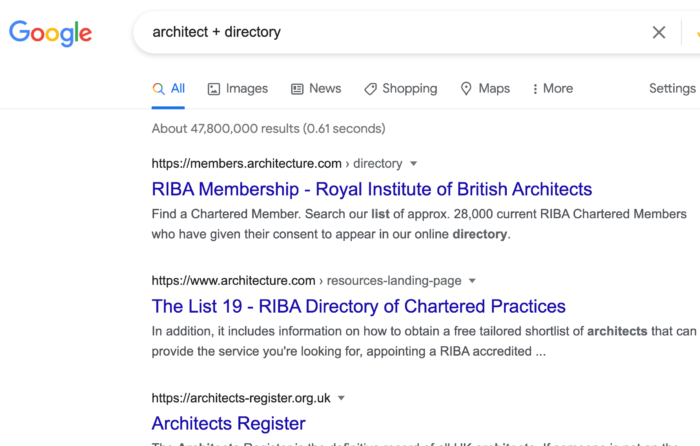
The meta title is the blue title that comes up when you search on Google.
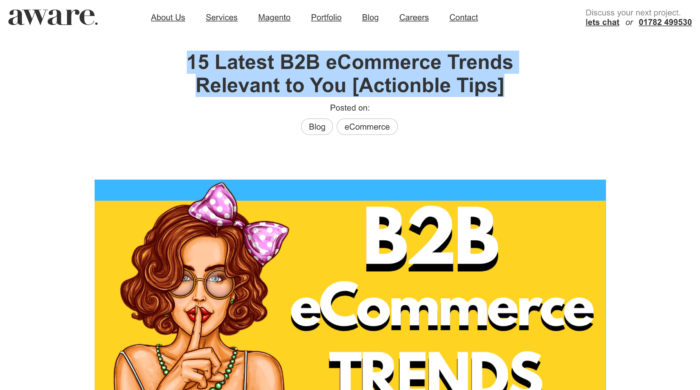
The H1 is the main title on the page. It needs to be at the top of the page and there should not be multiple H1 titles on a single page.
The URL is the string that comes up next to the domain.

Make sure you’ve got the right word count. You determine the word count by searching your keyword in Google and find the average word count on the first page of Google and go slightly above that.
For example, if you’re trying to rank for, “What are the best protein powders for skinny guys?” And find that the average word count on page one of Google search is 2,000 words. Your blog post would be slightly bigger at 2,200 words.
Next you need to add multimedia, throw in some images and videos.
And that’s how you optimise your website for the Google search results.
Yes, we can dive a lot deeper into this, however, this is the 80/20 principle. If you’ve got this, you’re good to go.
Scale the content
Now you need to scale your content. It’s not good enough publishing 1 post a week. You need to sprint.
Have a goal and go straight for it. Let’s say your goal is 100 blog posts. Do the keyword research, create an outline for the content and then try and get it done as quick as you get. Publish that content as soon as you can.
This is because it takes a long time for Google to rank your pages.
Take advantage of YouTube!

YouTube is hot right now, in fact, it’s the second most popular search engine in the world and Google owns it.
Also, it’s a lot less competitive to rank on YouTube than it is on Google.
Tutorial videos are incredibly popular on YouTube. People are always looking for ways to solve the issues they have.
Ask yourself, “what do my customers type into YouTube related to the pro